I'm Corey Stallings, a Boston real estate agent with eXp Realty serving buyers and sellers across Boston, Quincy, Randolph and Dedham. Let's win your next move. Serving Boston, Randolph, Dedham and Quincy, MA.
What are the key takeaways?
•The real question isn't "which is nicer" — it's whether you want public grandeur (Back Bay) or private hush (Beacon Hill). Both are blue-chip, so you get to choose on character.
•Back Bay fits the "lock-and-leave" buyer: full-service towers with concierge, parking, and roof decks, plus wide boulevards and Newbury Street steps away.
•Beacon Hill fits the stewardship buyer: older brownstones with historic texture, but fewer amenities and stricter renovation rules.
•Two price measures diverge — typical value points to Back Bay, median asking to Beacon Hill — so lean on typical value and recent closed sales, not sticker prices.
•Model the full cost: carrying costs at this level hit hard.
If you're shopping at the very top of Boston's luxury condo market, the biggest mistake is assuming every elite address feels the same.
It doesn't.
Back Bay and Beacon Hill offer two entirely different lives. One hands you grand boulevards, full-service towers, and easy lock-and-leave living — a home you can walk away from for weeks while the building handles security, packages, and upkeep. The other gives you historic architecture and a quieter, old-Boston hush.
Both remain among the city's strongest luxury submarkets, and both guard their historic character fiercely. State Rep. Jay Livingstone has testified on behalf of Beacon Hill, Back Bay, and Fenway residents, underscoring just how protective these neighborhoods are. That protected character is exactly what luxury buyers pay for, and it isn't going anywhere soon.
Is Back Bay the better fit if you want full-service city living?
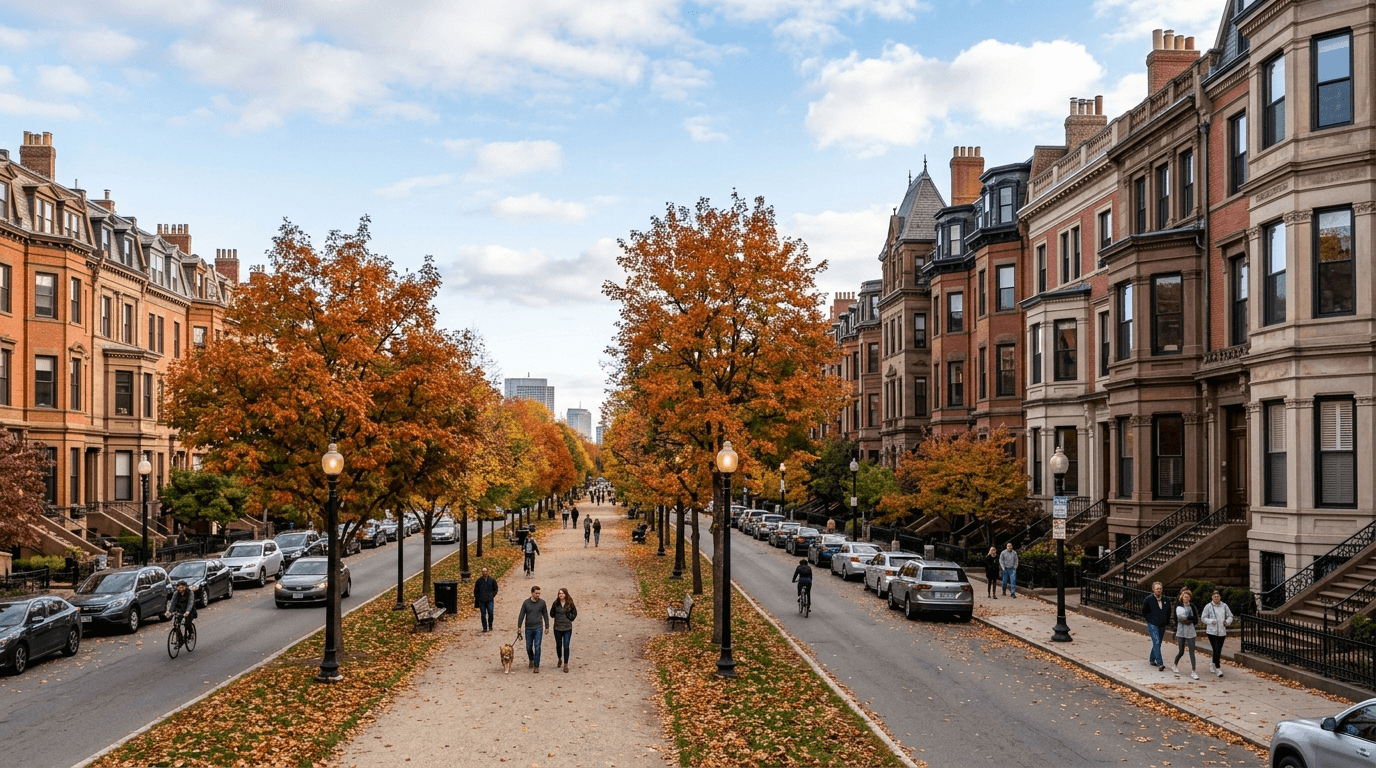
Back Bay is Boston at its most polished and public.
Step outside and the city opens up. Commonwealth Avenue offers a wide, tree-lined mall. Newbury Street puts boutiques, galleries, cafés, and restaurants within a short stroll.
Back Bay luxury generally splits into two categories: historic Boston brownstones in formal rows, and modern, high-service condo towers like One Dalton and the Mandarin Oriental. That tower lifestyle is the real differentiator — Beacon Hill simply doesn't offer it at the same scale.
Full-service living in Back Bay — 24/7 concierge, underground parking, roof decks — is a big part of what buyers are paying for.
For many high-end buyers, that convenience is the entire point. Elevators, single-level living, professional management, package handling, someone at the desk when you're away. If you split time between Boston, the Cape, Florida, New York, or Europe, that convenience carries real weight.
Across all home types — these figures reflect the whole market, not condos alone, so a luxury unit may sit well above them — Back Bay posted the higher typical home value in April 2026: $1,344,570 versus $1,070,536 for Beacon Hill.
Back Bay vs Beacon Hill Typical Home Value — April 2026
Compares Zillow-reported April 2026 typical home values for Back Bay and Beacon Hill.
Compares Zillow-reported April 2026 typical home values for Back Bay and Beacon Hill.
The convenience extends beyond the building itself. Back Bay's blocks are unusually dense with places to eat and drink: about 380 restaurants, bars, and coffee shops, with an average of 39 food-and-drink spots within a five-minute walk.
Back Bay Amenity Density Within a Short Walk
Shows Walk Score-cited amenity counts for Back Bay, including total restaurants, bars, and coffee shops and the average number of food-and-drink spots reachable within a five-minute walk.
Shows Walk Score-cited amenity counts for Back Bay, including total restaurants, bars, and coffee shops and the average number of food-and-drink spots reachable within a five-minute walk.
Series
Label
Value
Amenity Count
Restaurants, bars, and coffee shops
about 380 restaurants, bars, and coffee shops
Amenity Count
Food-and-drink spots within five minutes on foot
an average of 39 food-and-drink spots within five minutes
The trade-off is straightforward: Back Bay delivers energy, not always quiet. Streets stay busier, and the best buildings can carry steep monthly fees. Buying into a full-service tower means modeling the full annual cost, not just the purchase price.
Choose Back Bay if you want grand city living, modern amenities, easy travel, and a more public Boston lifestyle.
Is Beacon Hill the better fit if you want historic charm and privacy?
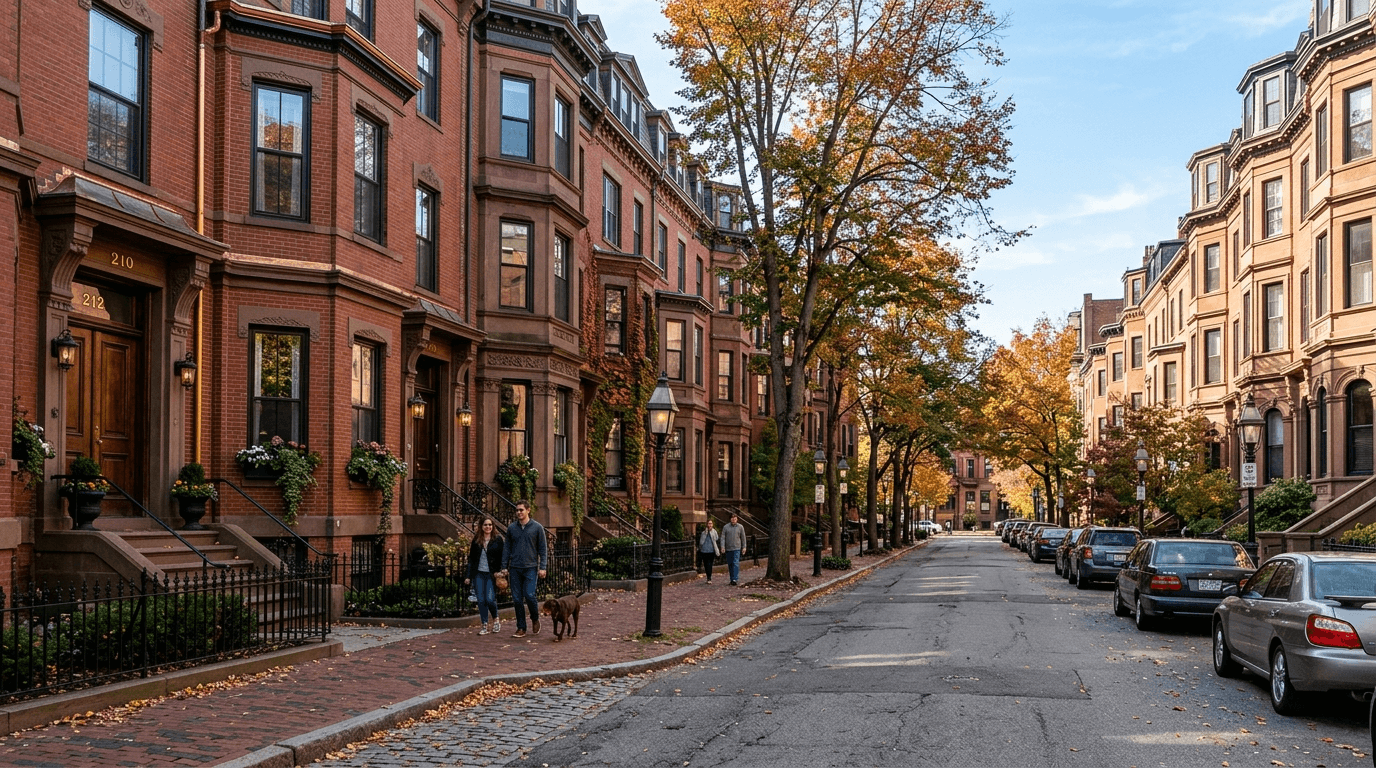
Beacon Hill answers a different wish entirely. It feels quieter, older, more tucked away — a private village folded into the city.
That emotional pull is real. One Reddit commenter swooned over "gas lampposts outside the front windows, looked amazing in the snow." That single line isn't evidence to buy on, but it captures why people fall hard for this neighborhood. It's about mood as much as square footage, and market reports back the same lifestyle contrast.
On mobility, Beacon Hill edges out Back Bay on both measures: a 99 Walk Score and 100 Transit Score, versus Back Bay's 97 Walk Score and 96 Transit Score.
Walkability and Transit: Back Bay vs Beacon Hill
Compares Walk Score and Transit Score for Back Bay and Beacon Hill using Walk Score data cited in the neighborhood comparison source.
Walk Score
Transit Score
Compares Walk Score and Transit Score for Back Bay and Beacon Hill using Walk Score data cited in the neighborhood comparison source.
Price behavior gets more nuanced here. Two measures point in opposite directions, so it helps to know what each one actually captures. "Typical home value" estimates across all homes and puts Back Bay ahead. "Median asking price" reflects only current listings, and can swing with whatever inventory happens to be on the market. By that measure — again, covering all property types, not condos alone — Beacon Hill listed higher in April 2026: $2.39 million versus $2.18 million in Back Bay.
Back Bay vs Beacon Hill Median Listing Price — April 2026
Compares Realtor.com-reported April 2026 median listing prices for Back Bay and Beacon Hill.
Compares Realtor.com-reported April 2026 median listing prices for Back Bay and Beacon Hill.
Negotiation strategy matters here. Don't treat a Beacon Hill listing price as the final number — look closely at recent closed sales on the same street, in the same building type, in similar condition.
Beacon Hill's downsides trace back mostly to its older buildings. Much of the inventory is brownstone housing, which often means fewer elevators, fewer garage options, and limited concierge-style services. Some homes feel magical. Others demand patience, renovation, and steady upkeep.
You'll also need to respect the rules. Massachusetts historic and conservation protections can limit what you change outside, and sometimes inside — confirm current restrictions with your agent before you buy.
Inspections are non-negotiable. Older buildings here can hide foundation issues, so a serious review — including the pilings underneath, when relevant — matters.
Choose Beacon Hill if quiet prestige, historic texture, and a preserved streetscape matter more to you than modern building amenities.
What are the strongest arguments against choosing only by lifestyle?
The first argument is fair: "At this level, buyers chase the right unit wherever it appears. The neighborhood feeling is secondary."
There's truth to this at the very top — for the rarest trophy properties, a buyer may follow the unit rather than the map. But that's the exception, not the rule. Trophy inventory exists in each neighborhood, and across the broader luxury segment, buyers still self-sort by character. Boston is a city of micro-markets, where buyer pool, pace of sale, and pricing shift sharply by neighborhood, building, and block. Because standout units exist in both places, most buyers still choose based on character.
The second argument holds up too: "Reddit anecdotes are weak evidence for a purchase this size."
Agreed — you shouldn't buy a multimillion-dollar home based on internet comments. But that comment isn't doing the heavy lifting here. Market reports and listing language independently frame Back Bay around its bustling commercial streets and Beacon Hill around architectural charm and walkability. The resident comments simply echo the professional view; they don't replace it.
How should you make the final call as a Boston luxury buyer?
Here's the decision in plain terms.
Back Bay vs Beacon Hill Lifestyle Priorities
Compares lifestyle priorities, building styles, amenities, streetscapes, and buyer fit between Back Bay and Beacon Hill luxury Boston neighborhoods heading into fall 2026.
Category
Back Bay
Beacon Hill
Building style
Full-service towers + brownstones
Historic brownstones
Amenities & parking
Concierge, garage, roof decks
Limited
Streetscape
Wide public boulevards
Quiet cobblestone lanes
Best for
Lock-and-leave convenience
Hands-on stewardship
If you want full-service towers and brownstones, concierge service, garage parking, roof decks, wide public boulevards, and lock-and-leave convenience, start in Back Bay.
If you want historic brownstones, limited amenities and parking, quiet lanes, and hands-on stewardship, start in Beacon Hill.
Both are durable, protected submarkets. Residents from each have pushed back against unchecked downtown height, which helps preserve the character premium.
But the unglamorous homework still matters. In Beacon Hill, budget for inspections, possible structural review, pilings, and renovation limits. In a Back Bay tower, model the full annual carry: condo fees, taxes, insurance, parking, and any assessments.
The best choice isn't "Back Bay" or "Beacon Hill" in the abstract. It's whichever one fits how you actually want to live every day.
If you'd like help comparing specific buildings, recent closed sales, and true carrying costs between the two, reach out before you tour. The right short list can save you time, money, and second-guessing.
Common Questions
What is the biggest difference between Back Bay and Beacon Hill luxury condos?
Back Bay offers public grandeur and full-service ease, while Beacon Hill offers private hush and historic charm. Back Bay condos often include concierge, parking, elevators, and roof decks. Beacon Hill leans toward preserved brownstones, gas-lit lanes, stricter renovation rules, and fewer building amenities for Boston luxury condos.
How should I choose between Back Bay condos and Beacon Hill condos?
Choose Back Bay condos if you want lock-and-leave living, wide boulevards, Newbury Street nearby, and services like a 24/7 concierge or underground parking. Choose Beacon Hill if you want historic character, cobblestone streets, and a quieter village feel, and you accept more upkeep and fewer modern conveniences.
Is Beacon Hill more expensive than Back Bay for luxury condos Boston MA?
Beacon Hill is not simply more expensive than Back Bay. In April 2026, Back Bay had the higher Zillow typical home value, while Beacon Hill showed a $2.39 million median asking price but a lower median sold price. For luxury condos Boston MA, compare asking and closing prices with an agent.
What costs should I model before buying a Boston luxury condo?
Buyers should model the full annual carry, not just the purchase price. For Back Bay towers, include condo fees, property taxes, insurance, and service costs. For Beacon Hill brownstones, budget for inspections, pilings, historic upkeep, and renovation limits. Massachusetts estate tax also matters because a multimillion-dollar condo is a major estate asset.